Our Uluwatu Property Investment Guide 2026 examines the outlook for Uluwatu in 2026 and beyond. It’s no secret that Uluwatu is one of the fastest appreciating corridors in Bali. A decade ago, Uluwatu was not even on the radar for most developers and investors. However, since 2023, this has changed dramatically and the pace of development has only increased.
The Bukit Peninsula is made up of numerous smaller markets and treating each area the same is the biggest mistake that investors make. Each area has its own buyer and seller and command its own price.
This guide explains the areas that make up Uluwatu, what each area has to offer, and other considerations before investing. For more information on the basics of investing in Bali property, see our guide titled ‘How to Invest in Bali Property as a Foreigner.’
Key Takeaways
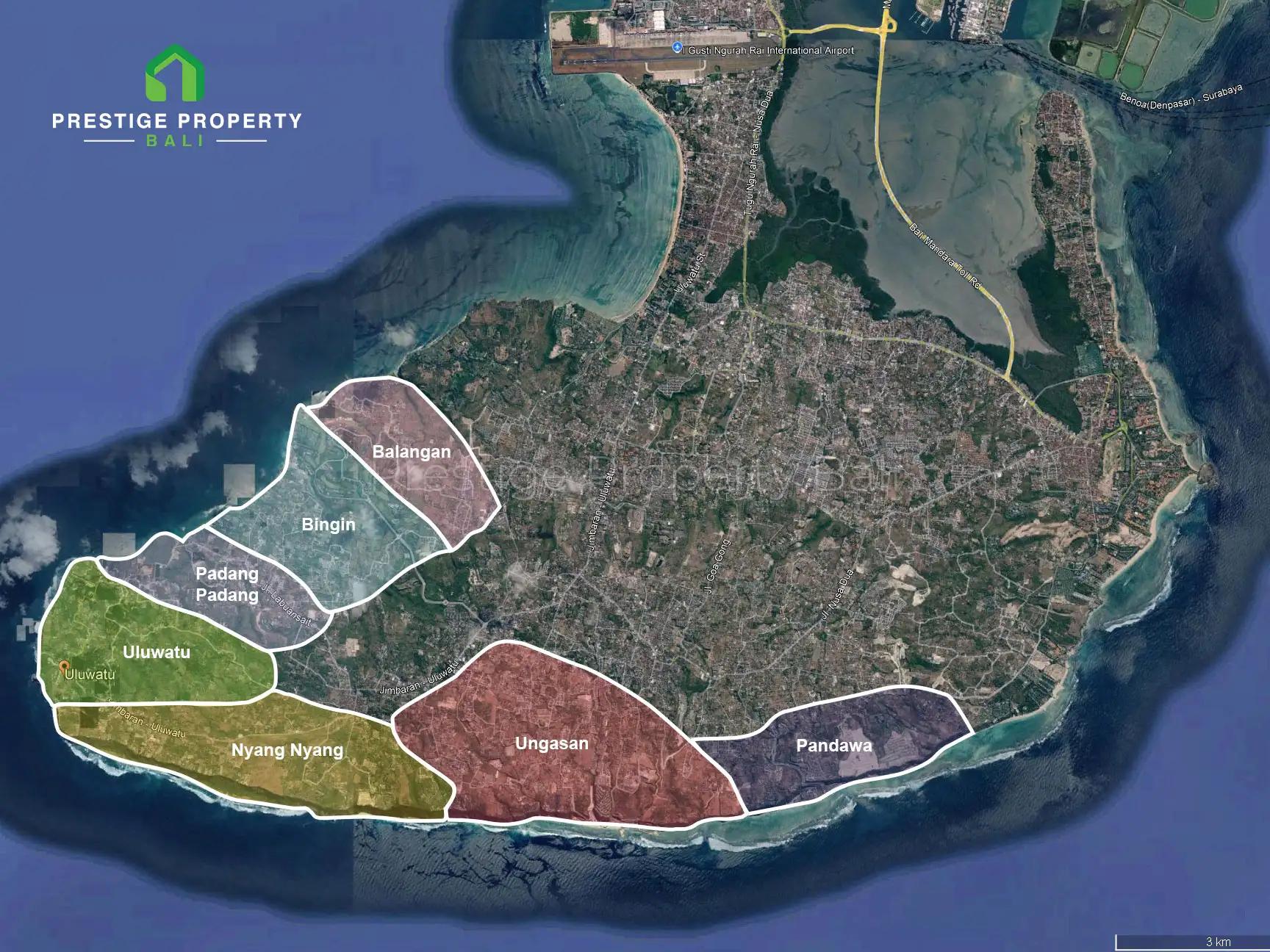
- Uluwatu is comprised of seven unique sub-areas (Bingin, Balangan, Padang Padang, Pandawa, Ungasan, Nyang Nyang and the Uluwatu Temple area), each with its own distinct price range and target audience.
- The strongest clifftop locations in Bali offer impressive gross rental yields ranging from 12-18%, which rank among the highest in the area.
- Over the years, land and villa values have seen a steady increase of 13-20% each year starting in 2023. This growth can be attributed to actual improvements in infrastructure rather than just speculation.
- Strict zoning enforcement was implemented after the 2025 measures were taken against clifftop developments that did not comply. As a result, verification has become an absolute necessity, rather than a choice.
- Prices for entry vary between USD 180,000 for smaller leasehold villas to over USD 1.2M for luxurious cliff-top estates.
- Through either a leasehold arrangement (Hak Sewa) or the use of a PT PMA company structure, foreign buyers are able to acquire property in Uluwatu. This legal framework applies to all areas of Bali, including Uluwatu.
Table of Contents
- Why Uluwatu Is Bali’s Fastest-Growing Investment Area
- Uluwatu Market Fundamentals
- Uluwatu Sub-Areas Explained – Where Is Where
- Ownership Structures for Foreign Buyers
- Zoning Considerations and the 2025 Enforcement
- Rental Yields and ROI Benchmarks
- Risks and What to Verify Before Buying
- Uluwatu Property Investment Guide: Is It Right for Your Strategy?
- Frequently Asked Questions
Why Uluwatu Is Bali’s Fastest-Growing Investment Area
Uluwatu occupies the entire southern tip of Bali – the Bukit Peninsula – and its investment story is fundamentally different from Canggu or Seminyak. Where those areas are built out and mature, Uluwatu is still in an active growth phase, with genuine infrastructure catching up to demand rather than demand chasing an already-saturated market.
Three factors are driving this growth:
- Dramatic clifftop terrain: Ocean-view land that simply does not exist in flat coastal areas like Canggu or Seminyak. This scarcity supports premium pricing that holds through market cycles.
- Improving infrastructure: Roads, utilities, and connectivity across the Bukit have improved substantially since 2022, opening previously inaccessible clifftop parcels to development.
- Shifting tourism demographics: A growing share of Bali’s international visitors now specifically seek out Uluwatu’s surf, wellness, and boutique luxury positioning – distinct from Canggu’s digital nomad crowd or Seminyak’s beach club scene.
Key Insight
The comparison investors should make is not Uluwatu today versus Canggu today – it is Uluwatu today versus Canggu five years ago. Buyers who entered Canggu in 2019-2020 at land prices of USD 150-200/m2 are now sitting on plots valued at USD 400-500/m2. Uluwatu’s clifftop land in the strongest sub-areas is following a comparable trajectory, but starting from a lower base and with less mainstream buyer awareness. The window for early-stage entry is narrowing but has not closed.
Uluwatu Market Fundamentals
For official Indonesia tourism and visitor arrival statistics supporting continued demand across Bali’s investment corridors, see BPS Indonesia.
| Metric | 2026 Benchmark |
| Annual land/villa appreciation | 13-20% in prime clifftop locations |
| Gross rental yield | 12-18% |
| Average occupancy (managed villas) | 65-80% |
| Entry price – leasehold villa | USD 180,000-400,000 |
| Entry price – luxury clifftop estate | USD 1.2M+ |
| Typical lease term | 25-30 years, extendable to 80 total |
Uluwatu Sub-Areas Explained – Where Is Where
Uluwatu refers to the entire southern Bukit Peninsula, not one single village. Understanding the sub-areas is essential before buying – each has a distinct character, price point, and buyer profile.
Bingin
Northwest coast of the peninsula, clifftop above Bingin Beach. A bohemian surf village character with a famous surf break, boutique warungs, and a younger international crowd. The most established of the emerging sub-areas, meaning less upside remains but also lower risk. Popular with boutique villa investors and surf-focused rental operators.
Balangan
Just north of Bingin, an adjacent clifftop location. Quieter than Bingin with dramatic cliff views and an emerging beach club scene. Investors here are typically betting on Balangan following Bingin’s trajectory – a reasonable thesis given the proximity and comparable terrain, though the timeline for that convergence remains uncertain.
Padang Padang
Central-west Bukit, near the internationally famous Padang Padang surf break. More developed tourism infrastructure than Bingin or Balangan, with a longer track record of visitor demand. Suits investors targeting surf tourism specifically rather than the broader luxury or wellness market.
Pandawa
East side of the peninsula, near Pandawa Beach. A calmer, family-friendly beach with newer development and gentler waters than the west-coast surf breaks. Attracts a different buyer profile entirely – family-oriented, longer-stay rental market rather than short surf trips.
Ungasan
Central Bukit, inland from the clifftop strips. More residential in character, with larger land parcels available at lower per-square-metre pricing than beachfront positions. The natural choice for buyers prioritising land size and future development flexibility over immediate ocean views.
Nyang Nyang
South of Balangan, Nyang Nyang remains one of the least developed stretches of the Bukit Peninsula, known for its long, largely untouched beach reached via a steep descent with minimal existing infrastructure. This is genuinely early-stage territory, appealing primarily to investors comfortable with higher execution risk in exchange for the lowest entry pricing on the peninsula and maximum exposure to future appreciation as access and infrastructure eventually develop. Buyers considering this area should weigh limited current accessibility and services heavily in their due diligence.
Uluwatu Temple Area
The southernmost tip of the peninsula, around the iconic Uluwatu Temple. This is the namesake area – commanding the most dramatic sunset views and the strongest brand recognition of any sub-area. Correspondingly, this is where the ultra-premium clifftop estate segment concentrates, with entry prices reflecting the location’s iconic status.
Ownership Structures for Foreign Buyers
Uluwatu follows the same legal ownership framework as the rest of Bali – foreigners cannot hold Hak Milik (freehold) title directly. The two accessible routes are:
- Leasehold (Hak Sewa): The most common structure for Uluwatu buyers. Terms typically run 25-30 years with extension options, giving effective tenure of 50-80 years. No company setup required.
- PT PMA + HGB: For buyers wanting permanent, freehold-equivalent ownership or planning larger commercial developments. Requires company setup with minimum registered capital of IDR 10 billion. See our complete PT PMA property guide for costs and process.
For a full legal breakdown of ownership options, read our guide on can foreigners buy property in Bali.
Zoning Considerations and the 2025 Enforcement
Zoning verification is more critical in Uluwatu than almost anywhere else in Bali. The dramatic clifftop terrain that makes the area attractive also means a meaningful share of land sits in environmentally sensitive or agricultural (green zone) classifications where construction is prohibited.
Following enforcement actions in 2025 targeting non-compliant clifftop developments, Bali’s regional government has significantly tightened scrutiny of new construction across the peninsula. Buyers should treat KKPR zoning verification as non-negotiable, not a formality – confirm pink zone (tourism) classification through the OSS portal before making any offer, and never rely on a seller’s verbal assurance about zoning status.
For a complete breakdown of building compliance requirements, see our guide on PBG and SLF in Bali.
Rental Yields and ROI Benchmarks
| Sub-Area | Avg Daily Rate | Occupancy | Gross Yield |
| Bingin / Balangan | USD 150-350 | 65-78% | 12-18% |
| Padang Padang | USD 130-280 | 68-80% | 12-16% |
| Uluwatu Temple area | USD 400-900 | 60-75% | 10-15% |
| Pandawa | USD 100-220 | 60-72% | 9-14% |
| Ungasan | USD 90-200 | 58-70% | 8-13% |
These figures assume professional management. Self-managed properties in Uluwatu typically underperform these benchmarks by 25-30% due to the area’s relative distance from central booking and guest-service infrastructure compared to Canggu or Seminyak.
Risks and What to Verify Before Buying
- Zoning status – as covered above, this is the single highest-stakes verification step in Uluwatu specifically.
- Access and road condition – some clifftop parcels have seasonal access challenges during the wet season. Verify road conditions and any planned infrastructure work before committing.
- Cliff stability and setback requirements – clifftop construction carries geological considerations that flat-land Canggu or Seminyak properties do not. Independent structural assessment is worthwhile for clifftop parcels.
- Distance from central services – some sub-areas are 30-45 minutes from the nearest hospital, international school, or major supermarket. Factor this into both personal use and guest experience planning.
- Management availability – fewer established property management companies operate in Uluwatu compared to Canggu. Confirm management capacity before purchasing for rental income purposes.
Before purchasing, read our complete villa buying checklist and our guide on risks of investing in Bali real estate.
Uluwatu Property Investment Guide: Is It Right for Your Strategy?
Uluwatu suits investors with a specific profile: those comfortable with a still-maturing market in exchange for stronger appreciation upside, those drawn to the surf, wellness, and clifftop luxury positioning rather than Canggu’s nomad culture or Seminyak’s beach-club scene, and those with a 5-10 year investment horizon rather than seeking immediate liquidity.
It suits less well: investors prioritising proven, stable rental income above growth potential, those wanting maximum convenience and proximity to established infrastructure, or those with a shorter investment horizon who may need to exit within 2-3 years.
For a comparison against other Bali investment corridors, see our guide on best areas to invest in Bali, or explore our complete overview of Bali real estate for sale. This Uluwatu property investment guide should give you the framework to decide if the Bukit Peninsula fits your portfolio.
Contact Prestige Property Bali to discuss which Uluwatu sub-area best matches your investment goals and budget.
Frequently Asked Questions
Is Uluwatu a good investment in 2026?
Yes, for investors seeking growth over immediate stability. Uluwatu offers gross rental yields of 12-18% in the strongest clifftop locations and annual appreciation of 13-20%, driven by genuine infrastructure improvement. It suits a 5-10 year investment horizon better than a short-term flip strategy.
Which part of Uluwatu is best for investment?
It depends on your goals. Bingin and Balangan offer the strongest short-stay rental demand from the surf and boutique travel market. Ungasan offers the best value for larger land parcels. The Uluwatu Temple area commands the highest prices but also the strongest brand recognition and premium nightly rates.
Can foreigners buy property in Uluwatu?
Yes, through the same legal structures available across Bali – leasehold (Hak Sewa, typically 25-30 years extendable) or PT PMA company structure for freehold-equivalent HGB title. Direct freehold ownership is restricted to Indonesian citizens.
What is the biggest risk when buying property in Uluwatu?
Zoning verification is the single highest-stakes issue specific to Uluwatu. The dramatic clifftop terrain means a meaningful share of land sits in environmentally protected or agricultural classifications where construction is prohibited. Following 2025 enforcement actions, always verify KKPR zoning status independently before making any offer.
How much does it cost to buy a villa in Uluwatu?
Leasehold villas start around USD 180,000-400,000 depending on sub-area, size, and proximity to the clifftop. Luxury clifftop estates in premium locations like the Uluwatu Temple area start at USD 1.2 million and above.