
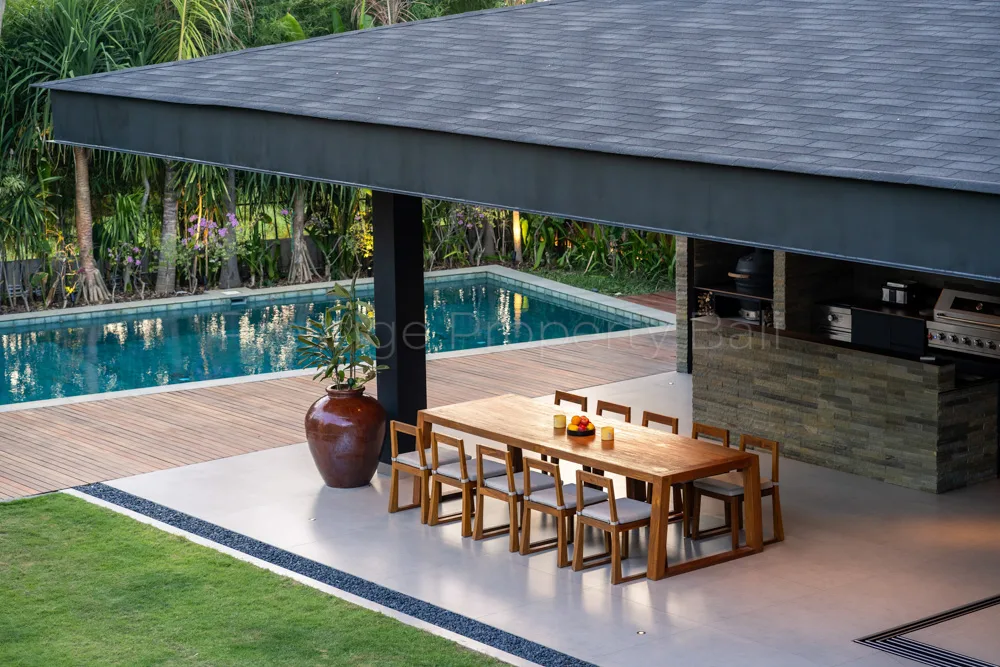
Bali property investment delivers some of the strongest risk-adjusted returns available to foreign buyers anywhere in Southeast Asia – gross rental yields of 10-18% in prime areas, consistent capital appreciation, and a tourism market that has grown to nearly 7 million international visitors annually. But investing as a foreigner requires a clear understanding of the legal structures, budget requirements, and investment strategies that separate successful outcomes from costly mistakes.
This guide covers exactly how to invest in Bali property as a foreigner in 2026 – written specifically for foreign buyers who want to understand the complete investment process from budget planning through to title registration and rental operations. For a broader overview of all property options available, see our complete guide to Bali real estate for sale.
Key Takeaways
- The minimum realistic entry point for a Bali property investment is USD 80,000-120,000 for a leasehold villa in an emerging corridor – but USD 150,000-250,000 gives you access to the strongest rental yield opportunities.
- Foreigners have three legal ownership routes: leasehold (Hak Sewa, most common), Hak Pakai (requires KITAS), or PT PMA company structure (freehold-equivalent HGB title).
- Gross rental yields of 10-18% are achievable in prime areas – but only with professional management, correct licensing (Pondok Wisata + NIB), and pink zone (tourism) zoning.
- The single biggest investment mistake is buying in the wrong zone – green zone land cannot be built on or operated as a rental regardless of what any seller claims.
- Total acquisition costs add 7-12% above the listed price – always build this into your investment budget before making any offer.
- Buy-to-rent outperforms buy-to-hold in the short term (0-5 years). Buy-to-hold in emerging corridors outperforms in the medium term (5-10 years).
Table of Contents
- Why Foreign Investors Choose Bali in 2026
- How Much Do You Need to Invest in Bali Property?
- Legal Structures for Foreign Property Investment
- Investment Strategies – Which is Right for You?
- Best Areas to Invest in Bali by Budget and Goal
- ROI by Property Type and Area
- Step-by-Step Investment Process
- Common Mistakes Foreign Investors Make
- Frequently Asked Questions
Why Foreign Investors Choose to Invest in Bali Property in 2026
Bali’s investment case rests on three structural advantages that most property markets cannot match simultaneously:
- Yield premium: Gross rental yields of 10-18% in prime areas vs 2-5% in most Western markets. The gap is structural – Bali’s short-stay rental costs (staff, utilities, maintenance) are significantly lower relative to rental income than comparable Western markets.
- Capital appreciation: Land values in prime corridors like Canggu, Seminyak, and Uluwatu have appreciated 15-25% annually from 2020-2025. Emerging corridors like Pererenan and Seseh are following the same trajectory at earlier stage pricing.
- Tourism resilience: Bali recorded 6.95 million international visitor arrivals in 2025 – a 9.72% increase on 2024. Indonesia holds investment-grade sovereign credit ratings and the tourism infrastructure continues to expand.
For official Indonesia tourism statistics, see BPS Indonesia – the national statistics agency that publishes monthly visitor arrival data.
Key Insight
The investors generating the strongest returns from Bali property are not those who bought in the most famous areas at peak pricing. They are those who identified the next corridor 2-3 years before it reached mainstream buyer awareness – and entered at prices that now look cheap. Pererenan buyers who entered in 2021-2022 at USD 200-250/m² are now sitting on land valued at USD 350-450/m². Seseh and Cemagi are at a comparable stage today. The question is not whether Bali property is a good investment. It is whether you enter before or after the market prices in what you already know.
How Much Do You Need to Invest in Bali Property?
Budget requirements vary significantly by strategy, area, and ownership structure. Here is a realistic breakdown for 2026:
| Budget Range | What You Can Access | Best Strategy |
| USD 80,000 – 120,000 | 1-2 bedroom leasehold villa in emerging corridors (Seseh, Cemagi, Tabanan). Off-plan in Uluwatu. | Buy-to-rent in emerging area. Longer appreciation horizon. |
| USD 150,000 – 250,000 | 2-3 bedroom leasehold villa in Pererenan, Canggu corridor, Berawa. Strong rental demand. | Buy-to-rent with professional management. Target 12-15% gross yield. |
| USD 250,000 – 500,000 | Premium leasehold in Canggu/Seminyak/Uluwatu. 3-4 bedroom with pool. Strong occupancy. | Buy-to-rent in prime area. Target 10-14% gross yield with highest occupancy. |
| USD 500,000+ | Luxury villas, PT PMA freehold, land banking, development projects. | PT PMA structure. Mix of rental income and capital appreciation. |
Always add 7-12% for acquisition costs: BPHTB transfer tax (5% for PT PMA purchases), notary fees (0.5-2.5%), legal due diligence, and BPN registration. Budget these before making any offer – they are non-negotiable costs on every transaction.

Legal Structures for Foreign Property Investment
Foreign individuals cannot hold Hak Milik (freehold) title directly under Indonesian law. Three legal structures give foreigners genuine, enforceable control over Bali property:
1. Leasehold (Hak Sewa) – Most Common
A registered agreement giving you exclusive rights to use, develop, sub-lease, and resell the property for a fixed term. Standard terms run 25-30 years with extension options written into the original agreement. Total effective tenure with a full extension can reach 50-80 years. No company required. No minimum capital. The most accessible and commonly used structure for foreign buyers – representing over 80% of foreign property transactions in Bali. Browse our current leasehold villas for sale in Bali.
2. Hak Pakai (Right of Use)
A government-registered title available to foreign individuals with a valid Indonesian residency permit (KITAS, KITAP, or Second Home Visa). Provides up to 80 years of legal title in your personal name without requiring a company structure. Less commonly used than leasehold due to the residency permit requirement, but provides stronger personal title protection for those who qualify.
3. PT PMA (Foreign-Owned Company) + HGB
A PT PMA (Perseroan Terbatas Penanaman Modal Asing) is a foreign-owned company that holds land under HGB (Hak Guna Bangunan – Right to Build) title – the closest legal equivalent to freehold available to foreign investors. Requires minimum registered capital of IDR 10 billion, at least two shareholders, and ongoing annual compliance obligations. Provides Investor KITAS eligibility and the strongest long-term ownership security. For a full breakdown of costs and process, see our complete PT PMA property guide.
Foreign investment regulations in Indonesia are governed by the Indonesia Investment Coordinating Board (BKPM) – the official government body overseeing PT PMA registration and foreign investment licensing.
Important: Nominee arrangements – where an Indonesian citizen holds property on a foreigner’s behalf – are explicitly illegal and criminally sanctioned under Bali’s Perda 4/2026. Up to 5 years imprisonment and IDR 1 billion fine for both parties. Never use this structure. For a complete guide to all legal ownership options, read our article on can foreigners buy property in Bali.
Investment Strategies – Which is Right for You?
| Strategy | How it Works | Best For | Typical Returns |
| Buy-to-Rent | Purchase a villa and operate as short-stay rental via management company or own PT PMA | Investors who want immediate income from day one | 10-18% gross yield. Net 7-12% after management fees and costs. |
| Buy-to-Hold | Purchase land or villa in emerging corridor and hold for capital appreciation | Investors with 5-10 year horizon who can wait for appreciation | 15-25% annual land appreciation in prime emerging areas |
| Off-Plan | Purchase at pre-construction price, sell or rent on completion | Investors with lower capital who want entry below market price | 15-25% discount vs completed price. Higher risk. |
| Land Banking | Purchase raw land in emerging area, hold for appreciation or development | Higher budget investors with development intentions or long horizon | 40-60% appreciation over 5 years in best emerging corridors |
Key Insight
The most common strategic mistake foreign investors make is choosing buy-to-rent in a premium area over buy-to-hold in an emerging corridor because the rental income feels more tangible. In practice, a USD 200,000 leasehold villa in Pererenan generating 14% gross yield and appreciating 20% annually produces a significantly better 5-year total return than a USD 350,000 Canggu villa generating 10% gross yield with limited remaining appreciation upside. Run the full 5-year return model – not just the yield number – before deciding.
Best Areas to Invest in Bali by Budget and Goal
| Area | Entry Price (2BR leasehold) | Gross Yield | Appreciation | Best For |
| Canggu / Berawa | USD 250,000-450,000 | 12-18% | Moderate – near ceiling | Rental yield, high occupancy, strong exit liquidity |
| Seminyak / Petitenget | USD 300,000-600,000 | 10-14% | Low – mature market | Stable income, premium nightly rates, built-out supply |
| Uluwatu / Bukit | USD 180,000-400,000 | 12-18% | High – fastest growing | Capital appreciation + yield, luxury segment growth |
| Pererenan / Seseh | USD 120,000-250,000 | 10-16% | Very high – emerging | Best value entry, strongest 5-year appreciation potential |
| Tabanan / Pasut | USD 80,000-180,000 | 8-12% | High – long horizon | Land banking, eco-resort development, low entry cost |
| Ubud | USD 100,000-300,000 | 8-12% | Moderate – stable | Wellness, retreat, long-stay rental market |
For a detailed breakdown of investment fundamentals in each area, see our guide on best areas to invest in Bali.
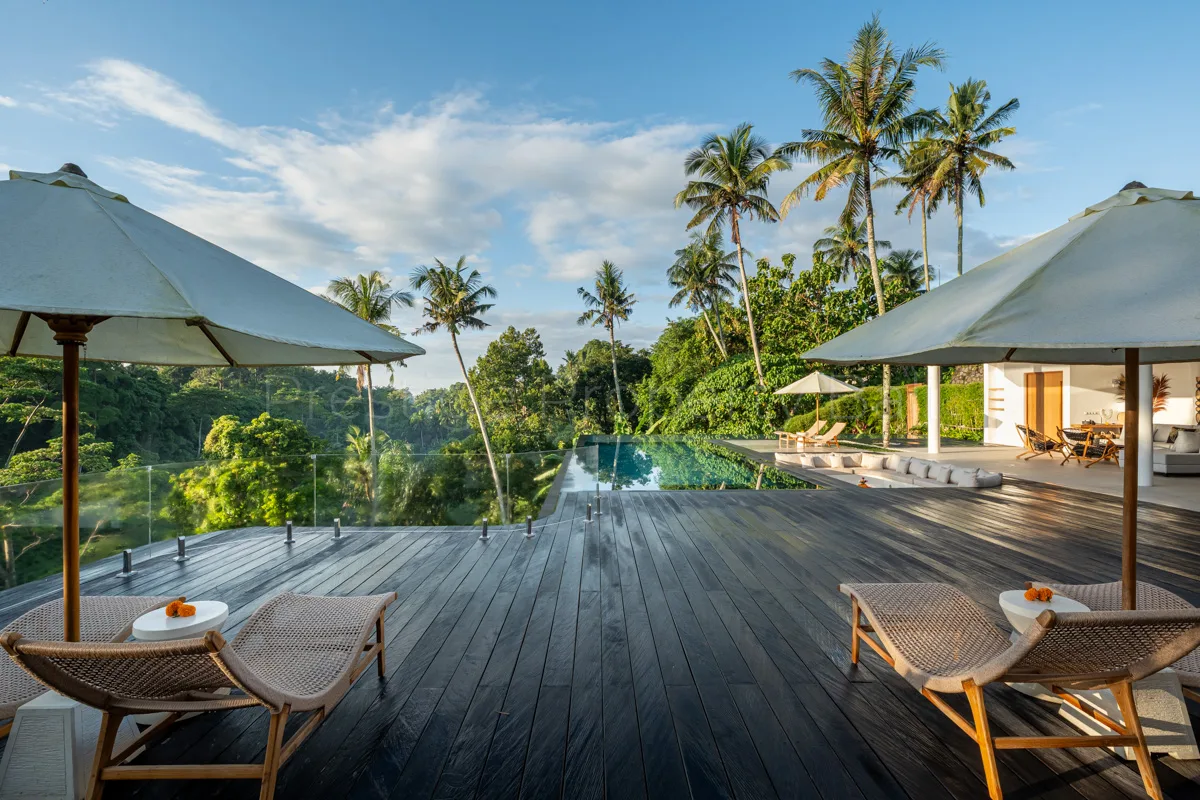
ROI by Property Type and Area
Return on investment in Bali varies significantly by property type, bedroom configuration, area, and management quality. Here are realistic benchmarks for 2026:
| Property Type | Avg Daily Rate | Avg Occupancy | Gross Yield | Net Yield (after mgmt) |
| 1BR Villa – Canggu | USD 80-150 | 70-80% | 14-18% | 9-12% |
| 2BR Villa – Canggu | USD 150-300 | 70-80% | 12-16% | 8-11% |
| 3BR Villa – Seminyak | USD 250-450 | 75-85% | 10-14% | 7-10% |
| 4BR Luxury – Uluwatu | USD 400-800 | 65-80% | 12-18% | 8-12% |
| 2BR Villa – Pererenan | USD 100-200 | 65-75% | 12-16% | 8-11% |
Note: These are gross yield benchmarks. Net yields after management fees (15-25% of gross revenue), maintenance, tax, and compliance costs typically run 30-40% below gross. Always model net yield – not gross – when evaluating an investment opportunity. Read our guide on how daily rental property works for foreigners in Bali for a full breakdown of operating costs and tax obligations.
How to Invest in Bali Property as a Foreigner: Step-by-Step Process
- Define your investment goals and budget – Decide between buy-to-rent, buy-to-hold, or off-plan. Set your total budget including 7-12% for acquisition costs. Determine your minimum acceptable yield or appreciation target.
- Choose your ownership structure – Leasehold for most first-time investors under USD 500K. PT PMA for larger investments, commercial operations, or buyers wanting permanent title. Confirm with an independent Indonesian property lawyer before proceeding.
- Research and shortlist properties – Focus on pink zone (tourism) land for rental investments. Shortlist 3-5 properties that match your budget, area preference, and yield targets. Never shortlist based on price alone.
- Verify zoning via KKPR – The single most critical due diligence step. Confirm pink zone tourism zoning through Indonesia’s OSS portal before making any offer. Green zone land cannot be developed regardless of what any seller claims.
- Engage independent PPAT notary – Never use the notary recommended by the seller or developer. Your notary must independently verify the land certificate at the BPN Land Office, check for liens or encumbrances, and draft your leasehold agreement or PT PMA purchase documents.
- Conduct full due diligence – Verify PBG (building approval) and SLF (certificate of functional fitness) for existing properties. Confirm NIB (business registration number) for rental properties. Check OSS compliance. Never pay any deposit before due diligence is complete. Use our complete villa buying checklist to ensure nothing is missed.
- Make your offer and negotiate – Base your offer on comparable sales data, remaining lease term, condition, and income history. Never pay above market simply because of urgency pressure from the seller.
- Execute the agreement – Sign the leasehold agreement or PT PMA purchase deed through your independent PPAT notary. Pay BPHTB (if applicable) and notary fees. Register at the BPN Land Office.
- Set up rental operations – Obtain Pondok Wisata license and NIB through the OSS portal. Engage a licensed management company or establish your PT PMA for direct operation. List on Airbnb, Booking.com, and direct booking channels.
Common Mistakes Foreign Investors Make
- Skipping zoning verification – The most expensive mistake. Green zone land with a villa on it is an uninsured, unsellable, and potentially criminally exposed asset. Always verify KKPR zoning before signing anything.
- Using a nominee arrangement – Now criminally sanctioned under Bali’s Perda 4/2026. Up to 5 years imprisonment and IDR 1 billion fine. Zero legal protection for the foreign investor in any dispute. Never use this structure.
- Choosing the seller’s notary – A notary recommended by the seller has a conflict of interest. Always engage your own independent PPAT with no connection to the seller or developer.
- Paying deposit before due diligence – Once money changes hands, your negotiating leverage disappears. Complete all due diligence before paying any deposit, regardless of pressure from the seller.
- Buying without PBG and SLF – As of 2026, villas without valid building permits cannot legally operate as rentals and risk closure orders. Verify both certificates independently.
- Comparing gross yield without modeling net – A villa generating 18% gross yield but paying 25% management fees, 11% VAT, and 22% corporate tax nets out significantly lower. Always model the full cost structure.
- Buying in the wrong area for your strategy – A buy-to-rent investor buying in a location with low tourism demand will underperform. A buy-to-hold investor buying in a mature market with limited appreciation will underperform. Match your property to your strategy.
For a complete guide to investment risks and how to avoid them, read our dedicated guide on risks of investing in Bali real estate and our guide to avoiding property scams in Bali.
Whether you are just starting to research how to invest in Bali property as a foreigner or are ready to make your first purchase, Prestige Property Bali provides end-to-end support – from property sourcing and legal structuring through to management and ongoing compliance.
Contact Prestige Property Bali to discuss your investment goals and find the right property for your strategy. Browse our current selection of villas for sale in Bali and land for sale in Bali across all investment corridors.
Frequently Asked Questions
How much money do I need to invest in Bali property?
The minimum realistic entry point for a Bali property investment is USD 80,000-120,000 for a leasehold villa in an emerging corridor such as Seseh or Tabanan. For access to the strongest rental yield opportunities in established areas like Canggu or Seminyak, budget USD 200,000-300,000. Always add 7-12% for acquisition costs above the listed price.
Can foreigners invest in Bali property?
Yes – through three legal structures. Leasehold (Hak Sewa) is the most accessible – 25-30 years extendable to 80 years, no company required, usable for rental operations with the correct licensing. Hak Pakai requires a valid Indonesian residency permit. PT PMA company structure provides freehold-equivalent HGB title for investors who want permanent ownership. Direct freehold (Hak Milik) is restricted to Indonesian citizens.
What rental yield can I expect from a Bali investment property?
Gross rental yields of 10-18% are achievable in prime areas like Canggu, Seminyak, and Uluwatu for well-managed, pink zone villas. Net yields after management fees (15-25% of gross revenue), maintenance, and tax obligations typically run 7-12%. Properties with professional management consistently outperform self-managed alternatives by 25-30%.
Is Bali property a safe investment in 2026?
Yes – when the correct legal structure, due diligence process, and professional advice are used. The risk comes from bypassing due diligence, using illegal nominee arrangements, purchasing non-compliant properties, or investing in the wrong zone. With proper process, Bali property has delivered consistent returns for international investors for over two decades. See our full analysis in our guide on is the Bali property market safe to invest in.
What is the best area to invest in Bali in 2026?
It depends on your strategy and budget. For rental yield: Canggu and Berawa. For capital appreciation and growth: Uluwatu and Bukit Peninsula. For best value entry with strong 5-year appreciation potential: Pererenan and Seseh. For stability and exit liquidity: Seminyak. For land banking and eco-development: Tabanan and Pasut. See our complete guide to the best areas to invest in Bali.
Do I need to be in Bali to manage my investment property?
No. Most foreign investors manage their Bali properties entirely remotely through a licensed management company. The management company handles bookings, guest relations, maintenance, licensing compliance, and tax remittance. You receive monthly income reports and net rental income transfers. This is the standard operating model for overseas Bali property investors.


