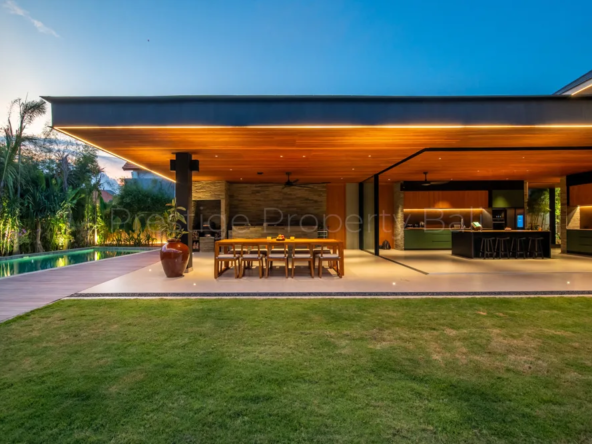

For foreign investors, the allure of Bali is undeniable. The dream of building a luxury villa, a private oasis or a high-yield rental property, is a powerful one. But this dream is built on a foundation of concrete and compliance. In recent years, Indonesia has fundamentally overhauled its building regulations. The old IMB (Izin Mendirikan Bangunan) is gone, replaced by a new, more stringent system.
Understanding this new system is not just “paperwork”; it is the single most critical factor protecting your investment from catastrophic risk. Two acronyms are now at the center of all legal construction: PBG and SLF.
Failing to comply can, and does, lead to severe penalties, including massive fines, construction stoppages, and even the government-ordered demolition of your asset.
This guide will provide a detailed deep dive into what PBG and SLF are, the severe consequences of non-compliance, and the exact process you must follow to secure your investment.
For a complete overview of Bali property investment and legal ownership structures, see our guide to Bali real estate for sale.
Key Takeaways
- PBG (Persetujuan Bangunan Gedung) replaces the old IMB — it is mandatory building approval required BEFORE any construction begins.
- SLF (Sertifikat Laik Fungsi) is the Certificate of Functionality required AFTER construction — without it, you cannot legally occupy or rent out the property.
- No SLF = no Pondok Wisata rental license = no legal Airbnb or Booking.com operation. As of March 2026, villas without NIB were automatically deactivated from short-stay platforms.
- Non-compliance penalties include building demolition orders, fines up to 10–20% of building value, and up to 5 years imprisonment in severe cases.
- Foreign leasehold holders cannot apply for PBG in their own name — the application must be made through a PT PMA company or Indonesian entity.
- Always verify ITR (zoning) before purchasing land — green zone land cannot be built on regardless of what any seller claims.
Table of Contents
Section 1: The Great Shift: From IMB to PBG
The most significant change in Indonesian property law came from the Omnibus Law (UU No. 11/2020 on Job Creation) and its key implementing regulation, Government Regulation (PP) No. 16/2021.
This legislation officially replaced the old IMB (Building Permit) with the PBG (Persetujuan Bangunan Gedung), or Building Approval.
The difference is more than just a name change; it’s a fundamental shift in philosophy.
- The old IMB was an izin (permit) you received from the government allowing you to build.
- The new PBG is a persetujuan (approval) declaring that your building plans have been reviewed and are fully compliant with all technical standards and safety regulations before you start.
This new system is stricter and places a much heavier emphasis on technical compliance and zoning.
Section 2: Deep Dive: PBG (Persetujuan Bangunan Gedung) – The “Green Light”
The PBG is the foundational “Green Light” for your project. It is the mandatory, legal authorization you must obtain before one shovel of dirt is moved.
- What it is: A legal document from the government confirming that your building’s design—including architectural, structural, and MEP (Mechanical, Electrical, Plumbing) plans—fully complies with all technical standards, safety standards, and health regulations.
- When you need it: You must have a PBG before starting any new construction, major renovation, expansion, or change to the building’s function.
- What it does: It provides a legal basis for your construction, increases the property’s value, and is the first step required to get all other operational permits.
Crucial Note for Foreign Investors: A foreigner holding a standard leasehold (Hak Sewa) cannot typically apply for a PBG in their own name. The PBG must be applied for by an Indonesian entity (a citizen or a company). For most investors, this means structuring your investment through a PT PMA (Foreign Investment Company), which can legally hold a HGB (Hak Guna Bangunan / Right to Build) title and be the official applicant for the PBG.
For a full breakdown of PT PMA costs and the HGB title structure, see our complete PT PMA property guide.
Section 3: Deep Dive: SLF (Sertifikat Laik Fungsi) – The “Key to Operate”
If the PBG is the “Green Light,” the SLF (Sertifikat Laik Fungsi), or Certificate of Functionality, is the “Key to Operate.”
- What it is: A certificate issued by the local government after construction is finished, declaring that your building is structurally sound, safe, and “proper to use” according to its approved function.
- When you need it: You must apply for the SLF once your building is 90-100% complete. Government inspectors will visit the site to ensure the finished building physically matches the technical plans approved in the PBG.
- Why it’s essential: You cannot legally occupy or operate your property without a valid SLF. It is the final, mandatory document required to obtain operational licenses, such as the Pondok Wisata (short-term rental license) needed for platforms like Airbnb or Booking.com.
The SLF has a validity period and must be renewed: typically 20 years for residential buildings and 5 years for commercial buildings.
Section 4: The High-Stakes Consequences: What Happens If You Ignore the Law?
This is the most critical section for any investor. Ignoring the PBG and SLF process is not a “calculated risk”—it’s a financial gamble with devastating consequences.
The government has broad enforcement powers and is actively cracking down. The penalties include:
- Administrative Sanctions: These range from written warnings, project delays, and suspension of construction to freezing the asset, revoking permits, and the most severe penalty: a building demolition order.
- Criminal Sanctions: In cases of severe negligence, the law allows for criminal charges. If non-compliance leads to property damage for others, penalties can include imprisonment for up to 3 years or a fine of up to 10% of the building’s value. If it results in injury or death, that can increase to 5 years imprisonment and a 20% fine.
Real-World Case Study: The Parq Ubud Disaster
You don’t have to look far for a real-world example. The high-profile Parq Ubud complex, a massive lifestyle and residential project, was forcibly and permanently shut down by Gianyar regency authorities.
- The Violation: The complex was found to be operating without the correct fundamental licenses, specifically the PBG and SLF.
- The Core Problem: The developers built the massive complex in a protected rice field zone (Green Zone), where construction is strictly illegal. They also illegally repurposed protected agricultural land for commercial use.
- The Outcome: Total operational shutdown and a catastrophic loss for the developers and anyone who had invested in the project. This case serves as a powerful, recent warning that the government is enforcing zoning and permit laws.
Key Insight
The Parq Ubud case is not an isolated incident. In March 2025, Bali’s Governor issued a directive ordering regency governments to audit all tourism businesses for PBG and SLF compliance. Enforcement teams conducted sweeps across Canggu, Seminyak, and Ubud, resulting in dozens of temporary closures and stop-work orders. Buyers purchasing existing villas should always request and independently verify the PBG and SLF certificates before completing any transaction, not just confirm that the seller “has them”.
Section 5: The “Hidden” Traps for Investors (Zoning & Culture)
Beyond just the PBG and SLF, there are two “hidden traps” that can derail a project before it even begins.
Trap 1: The ITR (Zoning) Nightmare
Before you lease or buy any land, you MUST check its ITR (Informasi Tata Ruang), which is the official zoning information. Building in the wrong zone is an absolute non-starter.
The primary zones in Bali are:
- Green Zone (Agricultural): For rice paddies and farming. Building is strictly prohibited. The Parq Ubud case is a prime example of violating this.
- Yellow Zone (Residential): Zoned for residential housing. You can build a private villa here, but you may face restrictions on commercial rentals.
- Pink Zone (Tourism): This is the correct zone for investment properties. It is designated for tourism-related developments like hotels, resorts, and rental villas.
- Red Zone (Commercial): For shops, restaurants, and offices.
Checking the ITR is the first step of due diligence. If the land is not in the correct zone for your plan, the government will not approve the permit.
Trap 2: The “Bali-Specific” Design Rules (Tri Hita Karana)
A design that looks good in a “modern” portfolio may be illegal in Bali.
- The Problem: An investor may design a villa with a modern, flat “square roof”.
- The Rejection: The government rejects the plan because it violates local cultural regulations, which may mandate a traditional linmas (pyramid-style) roof to “defend the culture and identity of Bali”.
- The Reason: This isn’t just an aesthetic choice; it’s often a legal requirement based on the Balinese philosophy of Tri Hita Karana. This philosophy, which dictates harmony between humans, God (Parahyangan), and the environment (Palemahan), is codified into local building regulations and spatial planning.
- The Lesson: Your project requires a certified planner (holding an SKA) who is experienced in integrating these distinct local requirements into compliant building designs.
Section 6: The Path to Compliance: A Simplified 6-Step Process
The process for obtaining a PBG and SLF is technical and best handled by a professional consultant, but as an investor, you should understand the key milestones.
- Data Collection & Due Diligence: Your consultant collects all land documents and, most critically, performs the ITR (zoning) check to confirm your project is viable on that plot of land.
- OSS Registration: The project is registered through the Online Single Submission (OSS) system, Indonesia’s central electronic portal for all business licensing, to obtain a Business Registration Number (NIB).
- PBG Registration & Technical Submission: The formal application is filed through the SIMBG (Building Management Information System) portal. This is where all technical documents—certified architectural, structural, and MEP plans, soil test results, etc.—are uploaded for review.
- Verification & TPA Hearing: Government officials verify the administrative and technical documents. The plans are then reviewed in a “hearing” (consultation) with the TPA (Tim Profesi Ahli / Team of Professional Experts), who give the final technical recommendation for approval.
- Retribution Payment (SKRD): Once approved, a SKRD (Regional Levy Decree) is issued. This is the official government invoice for the permit, calculated using a complex formula based on your building’s size, function, and location.
- Document Publication & Legal Construction: After you pay the retribution, the official PBG document is published. Only now can you legally begin construction. (You will repeat a similar process of inspection and verification to obtain your SLF upon completion).
Key Insight
The ITR zoning check costs nothing and takes minutes via the Indonesian OSS portal, but it is skipped by an astonishing number of buyers. We have seen investors complete due diligence on title, price, and rental projections while never confirming that the land is actually in the correct zone for their intended use. A pink zone villa investment on green zone land is not just non-compliant, it is an uninsured, unsellable, and potentially criminally exposed asset. Check the ITR first, before anything else.
Conclusion: Build Your Dream on a Solid Foundation
The Bali property market continues to offer incredible opportunities, but it is a regulated environment that demands diligence. The PBG, SLF, and ITR (Zoning) are the non-negotiable pillars of a legal, safe, and profitable investment.
The risks of non-compliance are not a distant threat; they are a present-day reality, as seen in high-profile cases. Project-ending delays, crippling fines, and the total loss of your asset through demolition are all on the table.
Don’t risk your investment. At Prestige Property Bali, we prioritize your security by ensuring our listings and partners adhere to the highest standards of legal compliance.
Before purchasing any villa or land in Bali, read our complete villa buying checklist and our guide on risks of investing in Bali real estate — both cover PBG, SLF, and zoning verification in detail.
Contact us today to build your Bali dream on a solid foundation.
Frequently Asked Questions — PBG and SLF in Bali
What is the difference between PBG and the old IMB in Bali?
The IMB (Izin Mendirikan Bangunan) was a construction permit issued before building. The PBG (Persetujuan Bangunan Gedung) replaced it under Indonesia’s Omnibus Law (UU No. 11/2020). The key difference: the PBG requires full technical plans — architectural, structural, and MEP — to be reviewed and approved before construction begins, making it a more stringent and compliance-focused system than the old IMB.
Do I need a PBG to buy an existing villa in Bali?
Yes — if you are buying an existing villa, you should verify that a valid PBG (or the old IMB if built before 2021) and SLF are in place. A villa without these documents is technically non-compliant under 2026 standards and faces legal exposure including potential demolition orders, inability to obtain rental licensing, and problems at resale.
Can a foreigner apply for a PBG in Bali?
Generally no — a foreigner holding a standard leasehold (Hak Sewa) cannot apply for a PBG in their own name. The application must be made through an Indonesian entity. For most foreign investors, this means structuring the investment through a PT PMA company, which can hold HGB (Right to Build) title and be the official applicant for the PBG.
How long does it take to get a PBG in Bali?
The PBG application process typically takes 3–6 months depending on the complexity of the project, the completeness of the submitted documentation, and the responsiveness of local government reviewers. Projects in high-demand areas or with complex designs may take longer due to the TPA (Technical Expert Team) review process.
What happens if my villa in Bali doesn’t have an SLF?
A villa without a valid SLF cannot legally be occupied or operated as a rental. As of March 2026, villas without a valid NIB (Business Registration Number) linked to an SLF were automatically deactivated from Airbnb and Booking.com in Bali. Beyond platform deactivation, non-compliance risks include administrative sanctions, fines, and in severe cases, demolition orders from local government authorities.
Sources:
- Provided Document: Pitch Deck Permit consultan by Pertama.pdf
- Legal Indonesia Service: https://legalindonesia.id/streamlined-services-for-building-permits-pbg-and-functionality-compliance-certificates-slf-in-indonesia/
- Bali Visas: https://www.balivisas.com/license/building-permit-pbg-slf/
- ILA Global Consulting: https://ilaglobalconsulting.com/how-to-apply-for-pbg-and-slf-in-bali/
- Own Property Abroad (PBG Guide): https://ownpropertyabroad.com/indonesia/bali/building-approval-pbg-bali/
- Dafamland (IMB vs PBG): https://www.dafamland.com/articles/1756349387-imb-vs-pbg-apa-bedanya-dan-mana-yang-berlaku-saat-ini
- Own Property Abroad (PBG in Indonesia): https://ownpropertyabroad.com/indonesia/building-approval-pbg/
- Eticon (TPA Explained): https://eticon.co.id/tim-ahli-bangunan-gedung/
- ResearchGate (Tri Hita Karana – Ergonomics): https://www.researchgate.net/publication/352251849_Ergonomics_and_Tri_Hita_Karana_on_Balinese_Traditional_Houses_Building
- ResearchGate (Tri Hita Karana – Application): https://www.researchgate.net/publication/353651425_The_Application_of_Balinese_Tri_Hita_Ka
- Exotiq Property (Building Regulations): https://www.exotiqproperty.com/blog/building-regulations-permits-in-indonesia
- Seven Stones Indonesia (Legal Sanctions): https://realestate.sevenstonesindonesia.com/legal-sanction-for-building-without-pbg-slf-permit-in-indonesia/
- The Bali Sun (Parq Ubud): https://thebalisun.com/parq-ubud-formally-shut-down-as-business-found-to-violate-multiple-regulations/
- TraceWorthy Consulting (Investor Compliance): https://www.traceworthy.com/foreign-investment-indonesia-compliance-ethical-development/
- Ilot Property (Bali Land Zoning): https://ilotpropertybali.com/bali-land-zoning/
- Excel Bali Real Estate (Zoning): https://excelbali.com/understanding-land-zoning-in-bali/
- Leks Lawyer (OSS Guide): https://blog.lekslawyer.com/business-licensing-application-through-online-single-submission-in-indonesia/