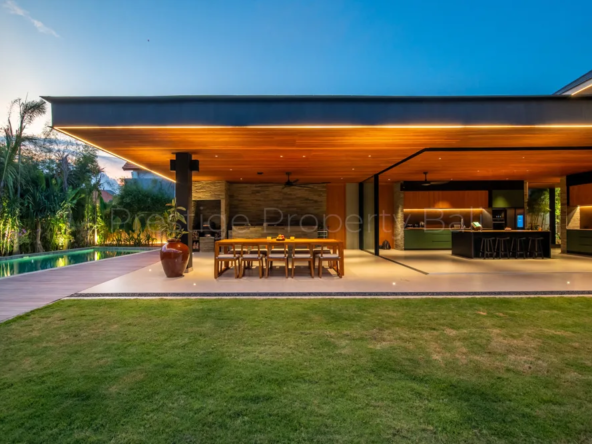

Bali crossed a landmark milestone in 2025: 7 million international arrivals, confirming that the island has not simply recovered from the pandemic, it has surpassed it. For foreign investors, this is more than a tourism headline. It signals that Bali’s property market has matured into a legitimate, globally recognised asset class.
But understanding the risks of investing in Bali real estate is just as important as chasing the returns. The same allure that makes Bali so compelling can obscure real complexities beneath the surface. Foreign ownership law, zoning compliance, construction quality, and hidden costs have derailed many first-time investors, a 2024 survey by the Indonesian Real Estate Association (REI) found that 65% of foreign-owned properties in Bali faced legal challenges, most of which were entirely avoidable with proper preparation.
This guide, written by the team at Prestige Property Bali, gives you an honest, ground-level look at both sides. We’ll walk you through the genuine rewards and the risks of investing in Bali real estate, so you can make the most informed decision of your
investment journey.
Before diving into the risks, read our complete guide on how to invest in Bali property as a foreigner
for the full investment framework.
Table of Contents
Why Bali? The Investment Case in 2026

Let’s start with the numbers, because they make a compelling argument on their own. In most Western property markets, a rental yield of 4-5% is considered strong. In Bali, professionally managed villas in prime locations routinely generate net yields of 10-15% annually, sometimes higher. Well-managed properties in hotspots like Uluwatu and Canggu maintain occupancy rates of 65-80%, not just during peak season but across the calendar.
What’s driving this performance? Several structural factors:
- Year-round tourism demand: Off-season months like October and December 2025 still maintained foreign arrival volumes of 594,000 and 572,000 respectively, a sign of structural resilience, not just peak-season spikes.
- Rising property values: Established zones are seeing steady annual price growth of 5-10%, with off-plan properties typically appreciating 20-25% between purchase and handover.
- A broadening investor base: the main buyer groups are Australians, British, Americans, and Europeans with Russian and Ukrainian investors also emerging as a significant presence since 2022, making Bali one of the real estate markets most dependent on foreign capital globally. If you’re an Australian considering your options, read our guide on Can Australians Live in Bali?
- Lifestyle-plus-income potential: Unlike most investment assets, a Bali villa can be both a personal retreat and a high-yielding rental business, a dual value proposition that few asset classes can offer.
The market has matured. The era of buying any plot of land and printing money is over. But for investors who choose the right location, legal structure, and management setup, Bali in 2026 remains one of the most attractive yield environments in Southeast Asia. For a complete overview of what’s available across the island, see our guide to Bali real estate for sale — covering ownership structures, prime locations, and investment strategies. For a broader picture, see our full guide on how to invest in Bali in 2026.
Understanding What You Can (and Can’t) Own

The single most important thing every first-time foreign investor must know before looking at a single listing: foreigners cannot legally own freehold land in Indonesia.
Indonesian law reserves Hak Milik (Freehold Title) exclusively for Indonesian citizens. That’s not a loophole waiting to be closed, it’s the foundational rule of the market. Investors who don’t understand this from the outset risk structuring their purchase incorrectly, leaving themselves exposed to legal challenges, voided contracts, or, at worst, the loss of their entire investment.
The three legitimate structures for foreign buyers are:
Leasehold (Hak Sewa)
The most accessible route for individual investors. You purchase the right to use the property for a defined period, typically 25 to 30 years with the option to extend. Modern leasehold contracts can be structured for up to 80 years total. Leasehold properties are widely traded, well understood by the market, and can be set up without a residency requirement. The key: ensure your contract is drafted by a reputable notary and clearly states renewal terms and conditions. Explore our current leasehold villas for sale to understand what’s available in the market today.
Hak Pakai (Right to Use)
A stronger form of ownership title, but it requires a valid Indonesian stay permit (KITAS). Hak Pakai grants more stability than a standard lease and is tied to you personally as a named foreign national. It’s a good option for investors who are already residing in Indonesia or plan to.
PT PMA (Foreign-Owned Company)
For serious investors treating Bali real estate as a commercial operation, setting up a PT PMA (Penanaman Modal Asing) unlocks Hak Guna Bangunan, the Right to Build. This is widely regarded as offering the highest level of investor protection, the cleanest framework for rental income taxation, and the most straightforward exit path if you ever sell. It’s more complex to establish and carries a minimum capital requirement of approximately USD 600,000, but it’s the professional-grade structure. For a step-by-step walkthrough of the full purchase process, read our guide on how to buy property in Bali in 2026 | Can Foreigners Buy Property in Bali? Complete 2026 Guide.
The Real Rewards – Numbers That Matter

With the legal framework understood, let’s talk returns and where in Bali those returns are most compelling right now.
Not all of Bali is equal. The island has distinct micro-markets, each with its own risk and reward profile:
| Area | Price/m² | Net Yield | Key Appeal |
|---|---|---|---|
| Canggu / Berawa | ~$2,500 | 8-12% | Strongest rental demand, digital nomad hub |
| Uluwatu / Bingin | $1,800-$2,800 | 12-18% | Luxury surf coast, scarcity of land drives value |
| Seminyak | $2,000-$3,500 | 8-12% | Established prestige, long-stay & boutique |
| Sanur | $1,200-$2,000 | 7-10% | Medical tourism hub, year-round occupancy |
| Emerging (Seseh, Tabanan) | $600-$1,200 | 6-10%* | Higher appreciation potential, longer horizon |
* Emerging zone yields may be lower initially; returns are weighted toward capital appreciation.
For a detailed breakdown of what these prices mean in practice, read our dedicated guide on how much property really costs in Bali. You can also browse live listings by area Canggu, Uluwatu, Seminyak, and Sanur to get a real-time sense of what’s available within your budget.
One concept worth adopting from experienced Bali investors: the “10-month yield” mindset. Rather than focusing only on peak-season performance, target properties whose occupancy and income hold up through October, November, and the quieter months of the year. That consistency is what separates a sustainable investment from a seasonal gamble.
For context, land prices in established zones like Canggu and Uluwatu have appreciated 15-20% annually in recent years, significantly outpacing most Western property markets where typical annual growth sits at 3-5%. That same trajectory is now appearing in Pererenan and the emerging northwest coast, but only for those who buy early, buy smart, and manage professionally.
The Real Risks – What First-Timers Often Miss

Source: Prestige Property Bali | Guaranteed Returns: Seminyak Villa Investment
This is the section most competitor articles rush through or downplay. We won’t. Understanding the risks clearly is not a reason to avoid Bali, it’s the foundation for investing in it successfully. For a practical companion read, see our post on the 8 crucial mistakes to avoid when buying property in Bali.
Risk 1: Legal and Title Issues
Land titles in Bali can be unclear, disputed, or in some cases outright fraudulent. Overlapping claims, unregistered easements, and forged certificates are more common than the marketing brochures suggest, BPN (Indonesia’s National Land Agency) has acknowledged the issue of duplicate land certificates, particularly in high-investment zones, as the country’s land records are still transitioning from decades-old paper archives to a digital database. According to a 2023 legal audit, only 25% of leasehold agreements in Bali were properly registered with the BPN, leaving 75% of leasehold investors exposed to potential disputes.
How to mitigate it:
- Always obtain the full land certificate (Sertifikat Tanah) from Indonesia’s National Land Agency (BPN).
- Use a licensed notary (PPAT) and an independent land surveyor to confirm legal boundaries and ownership lineage.
- Never sign a preliminary agreement before title due diligence is complete.
Risk 2: Zoning and Permit Non-Compliance
Bali’s zoning regulations are complex, and enforcement has become significantly stricter in 2025-2026. Properties operating without the correct permits or built in zones not designated for tourism or residential use, face very real consequences: fines, forced closures, or demolition orders. This is no longer theoretical risk. In July 2025, Bali’s Governor Wayan Koster personally oversaw the demolition of 48 illegal villas and businesses at Bingin Beach built on green-zone land without permits with zero compensation to owners. By August 2025, more than 100 additional properties across Bali, including villas, boutique hotels, and residential compounds, were under investigation for the same violations. A 2024 survey found that 40% of foreign investors failed to verify zoning classifications before purchasing, and 50% of demolished villas lacked a valid PBG building permit.
How to mitigate it:
- Confirm the land’s zoning designation with local authorities before making any offer.
- Verify that all building permits (PBG/SLF) and tourism operating licences are legally obtained and current.
- In 2026, properties with clean zoning and full compliance command a meaningful price premium and with good reason: only 35% of Bali’s rental villas currently hold a valid SLF operational permit, per a 2024 Bali Tourism Office report, meaning nearly two in three properties face exposure to enforcement action.
Risk 3: Construction Quality
Bali’s tropical climate is unforgiving to poorly built structures. Humidity, heat, seasonal rains, and salt air accelerate wear dramatically. Substandard waterproofing, inadequate drainage, and low-grade materials, common in budget developments can lead to structural failures within just a few years, generating repair bills that obliterate rental income.

How to mitigate it:
- Commission an independent structural and systems inspection before closing on any completed property.
- For off-plan purchases, review construction documentation and materials specifications carefully. Use escrow for staged payments tied to verifiable milestones. Browse our off-plan developments all listed with verified legal structures
- Work with developers who have a verifiable track record and completed projects you can inspect in person.
Risk 4: Hidden Costs
The headline purchase price of a Bali property is rarely the full picture. First-time investors consistently underestimate the cost of acquisition, and even more so the ongoing cost of operation.
On acquisition, budget for:
- 11% VAT on the purchase price
- 5% Transfer Tax (BPHTB)
- Notary fees of approximately 1% of transaction value
Ongoing, budget for:
- Property management fees (typically 20-30% of gross rental revenue)
- Annual land and building tax (PBB)
- Maintenance and replacement reserve (estimate 5-8% of revenue per year)
- Currency exchange costs when repatriating income to your home country
How to mitigate it:
Build a complete financial model, not just a yield calculation before committing. Stress-test your projections at 50% occupancy. If the numbers still work at that level, you have a resilient investment. Our guide on the cost of living in Bali can also help you understand the broader financial picture of operating here.
Risk 5: Oversupply in the Wrong Segment
One of the clearest market trends of 2025-2026 is the bifurcation between high-quality, well-located properties and generic cookie-cutter inventory. One-bedroom villas with no distinct design, no amenities, and no management edge are facing real pressure. Bali’s villa stock grew by 20% annually between 2018 and 2023, exceeding demand by an estimated 15% according to Bali Tourism Board data. Today there are over 39,000 active short-term rental listings in Bali, with median occupancy sitting at 65%, but that average masks a growing gap between standout properties and generic inventory competing purely on price.
How to mitigate it:
- Prioritise properties with unique architecture, superior finishes, and natural scarcity factors (beach proximity, rice field views, clifftop positions). Browse freehold villas and leasehold villas to compare the types of stock available
- Consider managed resort communities, which offer shared amenities (gyms, coworking, pools) and professional management that individual standalone villas struggle to replicate.
Risk 6: Tourism Dependence and Currency Volatility
Bali’s property market is fundamentally tied to global travel. The COVID-19 period demonstrated what happens when that tap turns off Bali’s international arrivals collapsed from 6.3 million in 2019 to under 50,000 in 2021, a near-total halt that left thousands of villa owners with zero rental income for over 18 months. While the island’s recovery to 7 million arrivals in 2025 is remarkable, that vulnerability to external shocks cannot be ignored. While the island’s recovery has been exceptional and the diversification into digital nomads, retirees, and medical tourism provides meaningful insulation, the underlying dependency on foreign arrivals remains.
Additionally, your rental income is earned in Indonesian Rupiah. Currency fluctuations against USD, AUD, or EUR can meaningfully affect your effective returns over time.
How to mitigate it:
- Blend short-term holiday rentals with longer-term monthly stays (digital nomads and expat tenants) to reduce volatility. See our guide on the best Bali neighborhoods for digital nomads in 2026 to understand where that demand concentrates
- Maintain a six-month operating reserve fund from the outset.
- Factor currency risk into your return projections and review periodically.
How to Enter the Market the Right Way

Every successful Bali property investor we’ve worked with follows roughly the same sequence. Here is the roadmap we guide our clients through at Prestige Property Bali:
- Define your investment goal. Are you seeking maximum rental yield, long-term capital appreciation, a lifestyle asset you can enjoy yourself, or some combination? Your goal determines everything that follows, the location, legal structure, property type, and management approach.
- Choose your legal structure before looking at properties. Leasehold for accessibility (commonly structured for 25-30 years, extendable to 80 years total), Hak Pakai for stability with residency (tied to a valid KITAS), PT PMA for commercial-grade protection (minimum capital requirement of approximately USD 600,000, but grants Hak Guna Bangunan and the strongest legal standing for rental operations). This decision should be made in consultation with a lawyer experienced in Indonesian property law, not based on what the developer recommends. Read our detailed guide on how to buy land in Bali as a foreigner to understand how these structures apply to land specifically.
- Select your zone based on data, not aesthetics. Uluwatu for luxury yields and scarcity. Canggu for proven demand and rental track record. Sanur for low-volatility, long-stay income. Pererenan and Umalas for emerging capital appreciation. Wondering which areas suit different lifestyles? Our guide on the best areas to stay in Bali covers every major zone in detail.
- Conduct title and zoning due diligence, before falling in love with any property. This is non-negotiable. Our full buying procedure guide walks you through every legal step.
- Build your full cost model. Acquisition taxes, notary fees, management fees, maintenance reserves, currency risk. Know your true net yield before you sign anything.
- Partner with a trusted, full-service local agent. Not just a listing portal. You need an agency with a legal network, current market data, post-purchase management support, and a track record of transactions they’re willing to stand behind.
At Prestige Property Bali, we guide every client through all six of these steps from initial strategy and legal structure selection to property identification, due diligence, and ongoing management support. We don’t just help you find a property. We help you build an investment.
Is Bali the Right Investment for You?
Here is the honest answer that most real estate content avoids giving:
If the left column resonates with where you are, Bali is likely an excellent fit for your portfolio. If the right column gives you pause, that’s not a reason to dismiss the opportunity, it’s a reason to keep learning before you commit.
Final Thoughts
Bali in 2026 is not the Wild West it was a decade ago, and it’s not the closed market that nervous investors sometimes fear. It is a mature, data-rich, legally navigable real estate environment that rewards preparation and punishes shortcuts.
The rewards are real: net rental yields of 10-18% in prime areas, capital appreciation of 20-25% during the construction phase on well-chosen off-plan properties, and the rare privilege of owning an income-generating asset in one of the world’s most desired destinations, one that welcomed 7 million international visitors in 2025 and shows no signs of slowing. The risks are equally real, but none of them are insurmountable for an investor who approaches the market with the right structure, the right legal advice, and the right local partner.
Ready to take the next step? Browse our full inventory of villas for sale, land for sale, and off-plan developments or get in touch with our team for a free, no-obligation consultation.
Frequently Asked Questions — Risks of Investing in Bali Real Estate
Is it safe to invest in Bali real estate as a foreigner?
Yes — when the correct legal structure, zoning verification, and due diligence process are followed. The main risks (title disputes, zoning non-compliance, construction quality) are all avoidable with proper preparation. Investors who work with experienced local advisors and engage independent legal counsel consistently achieve strong, secure returns.
What are the biggest risks when investing in Bali property?
The six key risks are: unclear or disputed land titles, zoning and permit non-compliance, poor construction quality, hidden acquisition and operating costs, oversupply in the generic villa segment, and tourism dependence combined with currency volatility. Each can be mitigated through proper due diligence and the right ownership structure.
Can foreigners legally own property in Bali?
Foreigners cannot hold direct freehold title (Hak Milik) under Indonesian law. The three legal ownership routes are leasehold (Hak Sewa, typically 25–30 years extendable to 80 years total), Hak Pakai (Right to Use, requires a valid Indonesian stay permit), and PT PMA (foreign-owned company, provides the strongest commercial-grade legal protection).
What is the biggest mistake first-time investors make in Bali?
Skipping zoning verification before purchase. In 2025, Bali’s Governor oversaw the demolition of 48 illegal villas built on green-zone land without permits — with zero compensation to owners. Confirming tourism zoning (pink zone) and valid building permits (PBG and SLF) before making any offer is non-negotiable.
What rental yield can I realistically expect from a Bali villa investment?
Net yields for well-managed, correctly zoned villas in prime areas typically range from 8–15% annually. Canggu and Berawa deliver 8–12%, Uluwatu and Bingin 12–18% for luxury properties, and Seminyak 8–12% with stronger capital stability. Emerging areas like Seseh and Tabanan offer 6–10% with higher appreciation potential. These figures assume professional management and realistic occupancy projections — not peak-season-only calculations.
The investors who succeed in Bali are not the ones who moved fastest. They’re the ones who asked the right questions first.