

Sanur normally gets overlooked when talking about Bali property investment opportunities, and that’s why we think this Sanur property investment guide should be worth a read, before you discard it. While Canggu and Seminyak hog the limelight, Sanur has built one of the calmest, most consistent property markets on the island, and one that neither of those strips can match.
This guide discusses what Sanur has to offer investors in 2026, compares it to Nusa Dua, and outlines what to investigate before you buy. For the larger investment scenario, see our guide on how to invest in Bali property as a foreigner.
Key Takeaways
- Sanur is a more residential area compared to Canggu or Seminyak, especially since it is Bali’s most established east coast market.
- Sanur has calmer, protected reefs, making the waters less turbulent, with a more laid back vibe than areas such as Seminyak or Canggu. Because of this, it has drawn families and retirees over the years and has thus remained a more residential, long stay area.
- Yields are 8-12%, which is less than Canggu, but more stable over the long term.
- A similar calmer, more family oriented area is Nusa Dua, which is a shorter drive south. Nusa Dua has a more resort driven area and a higher entry point than Sanur.
- Sanur has great tourism potential because of its ferry access to Nusa Penida and Lembongan, in addition to its longer stay base. This also helps with short stay rentals.
- Sanur has a more established, long stay base. Foreign buyers can purchase property using the same leasehold (Hak Sewa) or PT PMA structures as all of Bali.
Table of Contents
Why Consider Sanur?
Sanur is Bali’s original tourist resort area, developed decades before Kuta or Seminyak, and it has aged into something genuinely distinctive: a calm, walkable, low-rise coastal town that has deliberately avoided the high-density development seen elsewhere on the island. Building height restrictions along the coast have kept Sanur’s skyline low and its atmosphere unhurried, a character that has become increasingly rare, and increasingly valuable, as other coastal areas have densified.
Three factors drive ongoing investor interest in Sanur:
- A protected, swimmable coastline: A long offshore reef breaks the surf along most of Sanur’s beachfront, creating calm, family-safe waters that neither Canggu nor Uluwatu can offer. This is a genuine, physical differentiator, not a marketing claim.
- A settled, less seasonal demand base: Sanur attracts a high proportion of long-stay retirees, families, and returning visitors rather than short weekend tourism, which smooths out the sharp seasonal swings seen in party-oriented areas.
- Ferry gateway status: Sanur harbour is the main departure point for Nusa Penida and Nusa Lembongan, giving the area a steady flow of transit tourism that supports short-stay rental demand alongside its core long-stay base.
Key Insight
Sanur’s building height restrictions, originally introduced to protect the view of coastal temples, have had an unintended investment benefit: they have permanently capped the supply of new high-density development along the beachfront. In a market where scarcity drives value, a regulation that limits new supply functions similarly to a natural land shortage. Investors who understand this often treat Sanur’s low-rise character as a durable structural advantage rather than a lifestyle preference.
Sanur Market Fundamentals
| Metric | 2026 Benchmark |
| Annual property appreciation | 6-10% |
| Gross rental yield | 8-12% |
| Average occupancy (managed villas) | 60-72% |
| Entry price – leasehold villa | USD 130,000-350,000 |
| Entry price – beachfront property | USD 500,000+ |
| Typical lease term | 25-30 years, extendable to 80 total |
These figures sit below Canggu and Uluwatu’s strongest metrics, reflecting Sanur’s more conservative, stability-oriented market character rather than a weaker underlying investment case. For official Indonesia tourism data, see BPS Indonesia.
Sanur Sub-Areas Explained
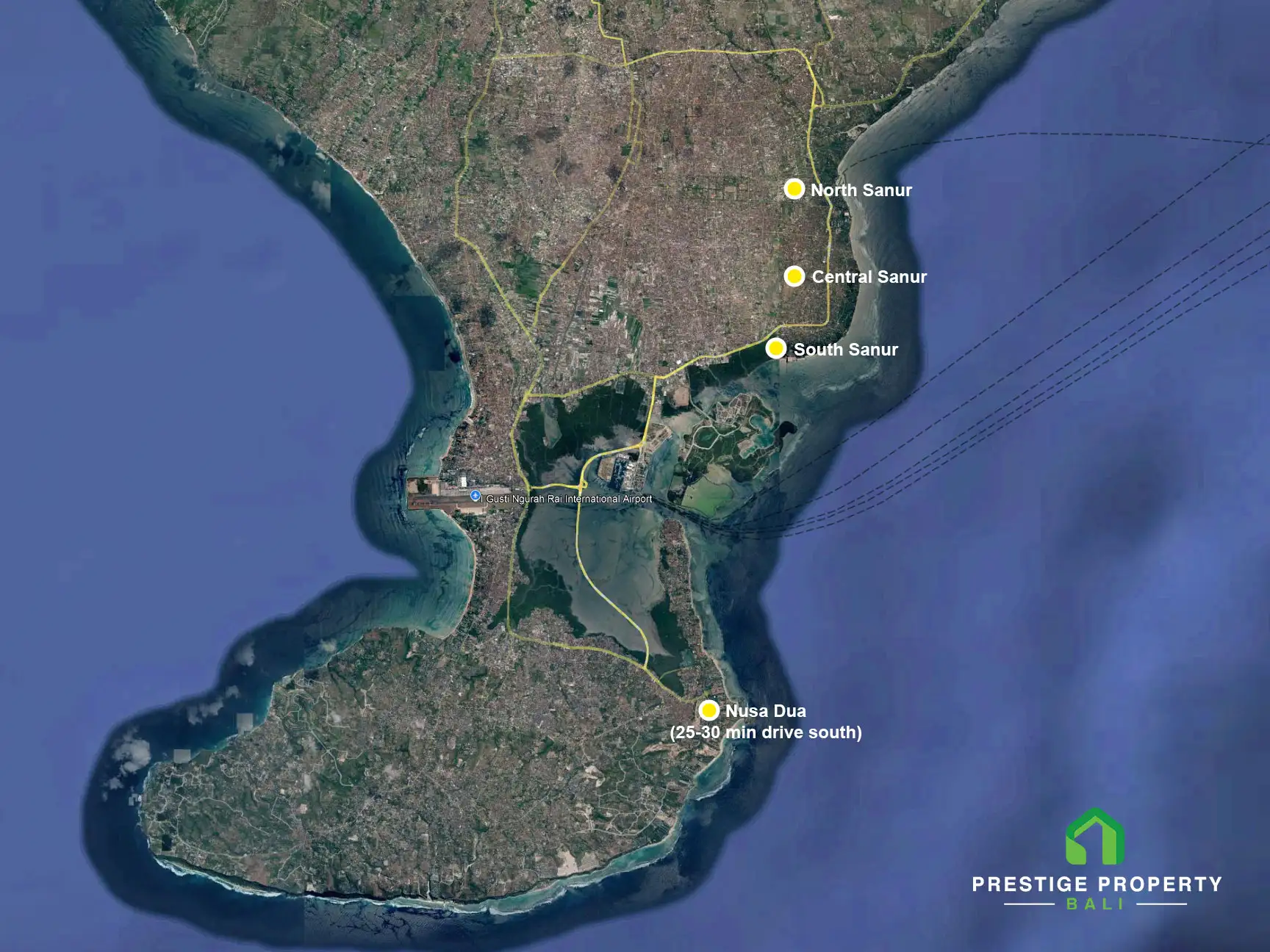
Sanur runs roughly north to south along the coast, and while the differences between its sections are subtler than the Uluwatu peninsula’s distinct pockets, they still matter for buyers.
North Sanur (near Sindhu Market)
The liveliest section of Sanur, closest to the main beachfront walk, cafes, and Sindhu night market. The best fit for investors targeting short-stay rental income, given the higher density of restaurants, shops, and pedestrian beachfront traffic.
Central Sanur (Danau Tamblingan area)
The commercial spine of Sanur, home to most of the area’s hotels, dive shops, and the harbour serving Nusa Penida and Nusa Lembongan ferries. Strong for both short-stay tourism and longer-term rentals given its central, walkable position.
South Sanur (Mertasari area)
Quieter, more residential, with wider beaches and a larger concentration of long-term expat and retiree residents. Better suited to buyers prioritising a peaceful personal residence or long-term rental income over short-stay tourism yield.
Nusa Dua: The Nearby Alternative
A twenty-five to thirty minute drive south of Sanur, Nusa Dua offers a related but distinct proposition worth understanding alongside Sanur itself. Where Sanur developed organically as a low-key beach town, Nusa Dua was purpose-built from the 1970s onward as a master-planned resort enclave, home to many of Bali’s largest international hotel brands.
This gives Nusa Dua a more polished, resort-driven character. Beaches are calm and reef-protected similarly to Sanur, infrastructure is highly developed, and the area attracts a similarly family-oriented, lower-key visitor profile. Entry prices for comparable properties tend to run slightly higher than Sanur, reflecting the area’s more manicured, resort-standard environment, while rental yields sit in a broadly similar 8-12% range.
For investors, the practical distinction is character rather than fundamentals: Sanur offers a more local, walkable, village-adjacent feel, while Nusa Dua offers a more contained, resort-standard environment. Both share the calm-water, family-friendly positioning that differentiates them from Bali’s surf-and-nightlife corridors.

Ownership Structures for Foreign Buyers
Sanur and Nusa Dua follow the same legal ownership framework as the rest of Bali. Foreigners cannot hold Hak Milik (freehold) title directly. The two accessible routes are:
- Leasehold (Hak Sewa): The most common structure, typically 25-30 years with extension options, giving effective tenure of 50-80 years.
- PT PMA + HGB: For buyers wanting permanent, freehold-equivalent ownership. See our complete PT PMA property guide.
For a full legal breakdown, read our guide on can foreigners buy property in Bali.
Rental Yields and ROI Benchmarks
| Area | Avg Daily Rate | Occupancy | Gross Yield |
| North Sanur | USD 90-200 | 65-72% | 10-12% |
| Central Sanur | USD 80-180 | 62-70% | 9-12% |
| South Sanur | USD 70-150 | 58-68% | 8-10% |
| Nusa Dua | USD 100-250 | 60-72% | 8-12% |
These figures assume professional management. Given Sanur’s higher proportion of long-stay tenants compared to Canggu or Seminyak, net yield after management costs tends to hold up relatively well against gross yield, since long-stay bookings generate lower turnover and cleaning costs than high-frequency short-stay rentals.
Risks and What to Verify Before Buying
- Zoning status – verify KKPR zoning through the OSS portal before any offer, as with any Bali property purchase.
- Height restriction compliance – confirm any planned renovation or construction complies with Sanur’s coastal height limits before assuming a project is feasible.
- Rental licensing – confirm Pondok Wisata or equivalent licensing is in place or obtainable if short-stay rental income is part of your strategy.
- Distance from central Canggu/Seminyak – Sanur sits on the opposite side of Denpasar from Bali’s other major investment corridors, which affects staff, supplier, and management company availability compared to the southwest coast.
Before purchasing, read our complete villa buying checklist.
Is Sanur Right for Your Investment Strategy?
Sanur and Nusa Dua suit investors prioritising stability and a settled, less seasonal tenant base over maximum yield potential, buyers drawn to a family or retiree-oriented lifestyle rather than the surf, nightlife, or digital-nomad culture that defines Canggu and Uluwatu, and those comfortable with modest but consistent returns in a market that has proven durable across multiple tourism cycles rather than chasing the highest headline yield figures elsewhere on the island.
It suits less well investors purely optimising for maximum short-stay rental yield, or those wanting exposure to Bali’s fastest-growing, most dynamic corridors. For a comparison against other Bali investment areas, see our guide on best areas to invest in Bali, or explore our complete overview of Bali real estate for sale.
You can also browse our current Bali villas for sale, or contact Prestige Property Bali to discuss whether Sanur or Nusa Dua fits your investment goals.
Frequently Asked Questions
Is Sanur a good place to invest in property in Bali?
Yes, for investors prioritising stability over maximum yield. Sanur offers gross rental yields of 8-12%, supported by a settled, less seasonal demand base of long-stay residents, retirees, and ferry-transit tourism, making it more resilient to seasonal swings than party-oriented corridors, though with a lower yield ceiling than Bali’s most dynamic markets.
How does Sanur compare to Nusa Dua?
Both offer calm, reef-protected beaches and a family-friendly, lower-key character. Sanur developed organically with a more local, walkable feel and generally lower entry prices. Nusa Dua is a master-planned resort enclave with more polished infrastructure and slightly higher entry prices. Rental yields are broadly similar across both.
Can foreigners buy property in Sanur?
Yes, through the same legal structures available across Bali – leasehold (Hak Sewa, typically 25-30 years extendable) or PT PMA company structure for freehold-equivalent HGB title. Direct freehold ownership is restricted to Indonesian citizens.
What makes Sanur different from Canggu or Seminyak?
Sanur has a calmer, lower-density character due to long-standing building height restrictions along the coast, a reef-protected swimmable coastline, and a demand base weighted toward long-stay residents and families rather than short-trip tourism and nightlife. Rental yields are generally lower than Canggu’s strongest pockets, but occupancy tends to be more stable and less seasonal.
How much does a villa cost in Sanur?
Leasehold villas typically start around USD 130,000-350,000 depending on location and specification. Beachfront properties in the most established sections start from USD 500,000 and above.


